
Discrete and Discreet
Tricksy Twins

Late in the reign of Henry VIII (who knew a thing or six about matrimony), the pseudonymous Walter Wedlock wrote a light-hearted dialogue on the subject of wedded bliss.1 In the course of doing this, he employed ‘discrete’ in two very different ways: first to emphasize the singular character of ‘discrete old wines’ and then as a synonym for ‘circumspect’, ‘tactful’, and ‘sagacious’.
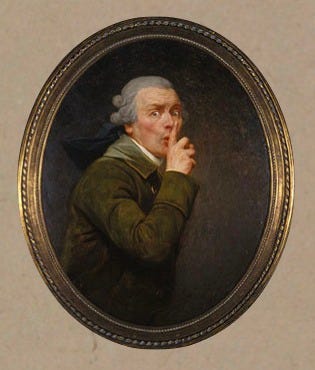
In doing this, Master Wedlock followed the custom of the French, who equip (and, indeed, persist in providing) discret with two discrete meanings. As a result, readers who wish to know whether Citizen Ducreux was diplomatic or discontinuous, prudent or peculiar, were obliged to infer that information from context.
In the century that followed, English-speaking authors used a slight difference in orthography to distinguish between the two meanings of the Anglophone descendants of discret. In particular, they decided switch two letters in the word meaning ‘wise’ while reserving the older spelling for the second, less common, increasingly mathematical, meaning.
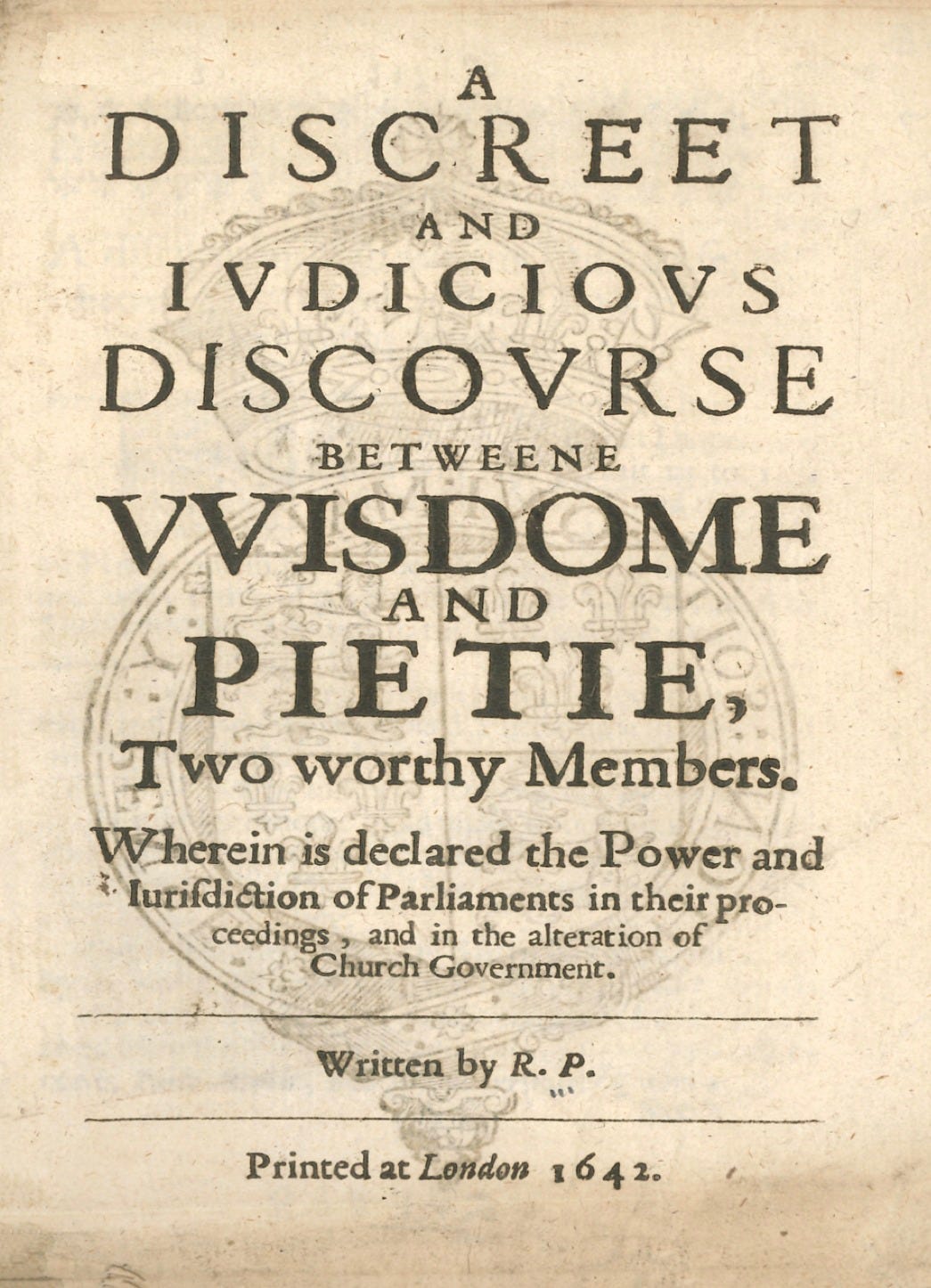
This convention, which has now been with us for close to four centuries, taxes the memories of pen-wielding Anglophones. I therefore propose a simple way to remember the difference between ‘discreet’ and ‘discrete’.
When the vowel doing the work of the second syllable stands alone, then the word refers to something that displays a high degree of individualism. When, however, two e’s keep such close company with each other, we hope that they will conduct their relationship with a due degree of discretion. (My thanks to Mrs. Muros for suggesting the second aide mémoire.)


A Lyttle Treatyse Called y Image of Idlenesse (London: Wyllyam Seres, circa 1550)