

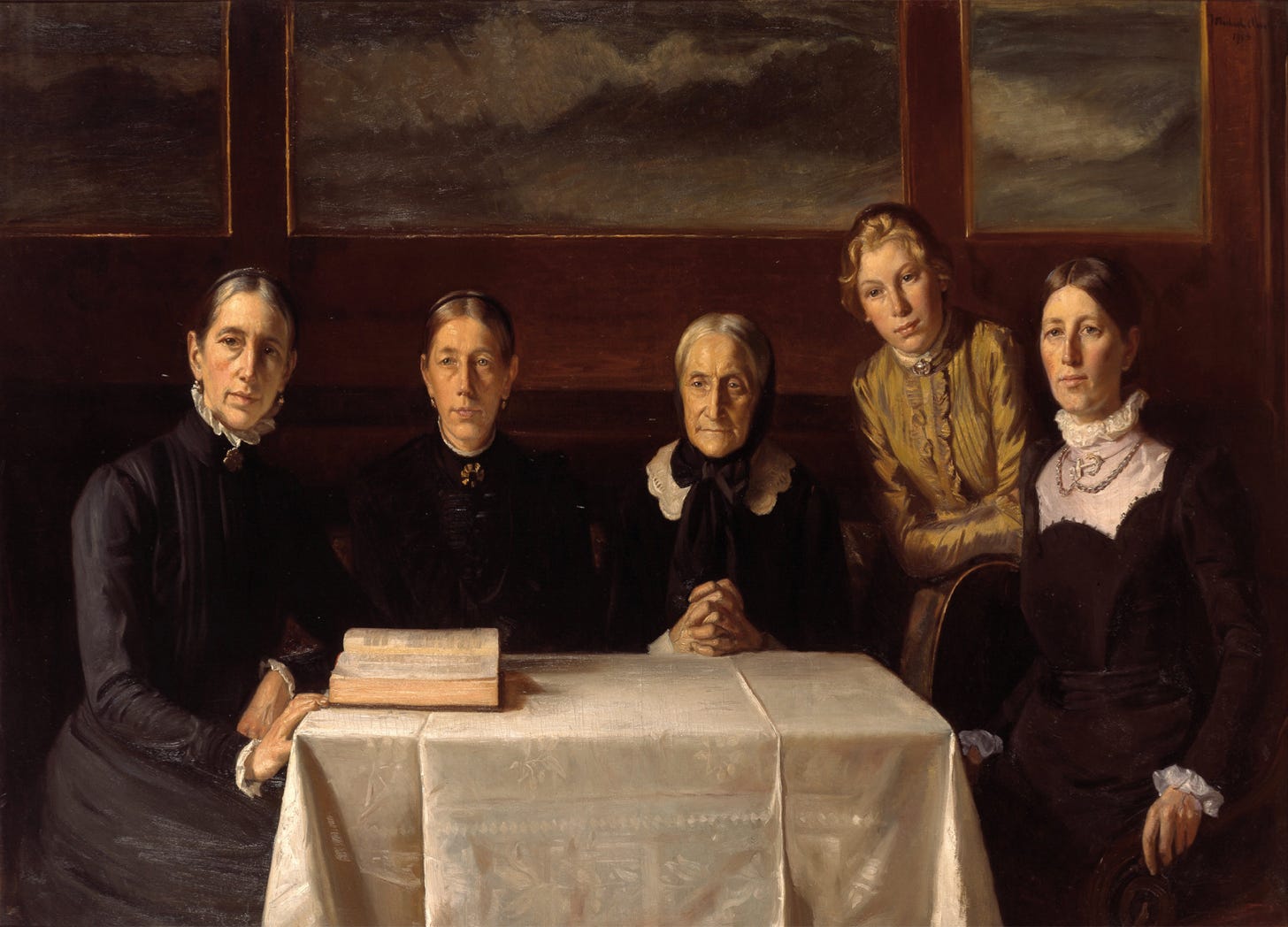
In the teens of the present century, an age of wonders in which airlines beamed entertainment onto little screens on the backs of passenger seats, I watched The Shamer’s Daughter. Based on a Danish young adult novel of the same name, this movie recounted the adventures of a medieval lass who discovered that, like her mother, she was able to wield the most Scandinavian of all super powers: the ability to induce intense feelings of guilt and embarrassment.
I selected this film, in part, because films tailored to peri-pubescent tastes often serve as excellent tools for language learning. (As you might imagine, this incidental attribute owes much to the definitive features of the young adult genre: simplistic setting, unsubtle dialogue, predictable plots, and, best of all, minimal ambiguity.)
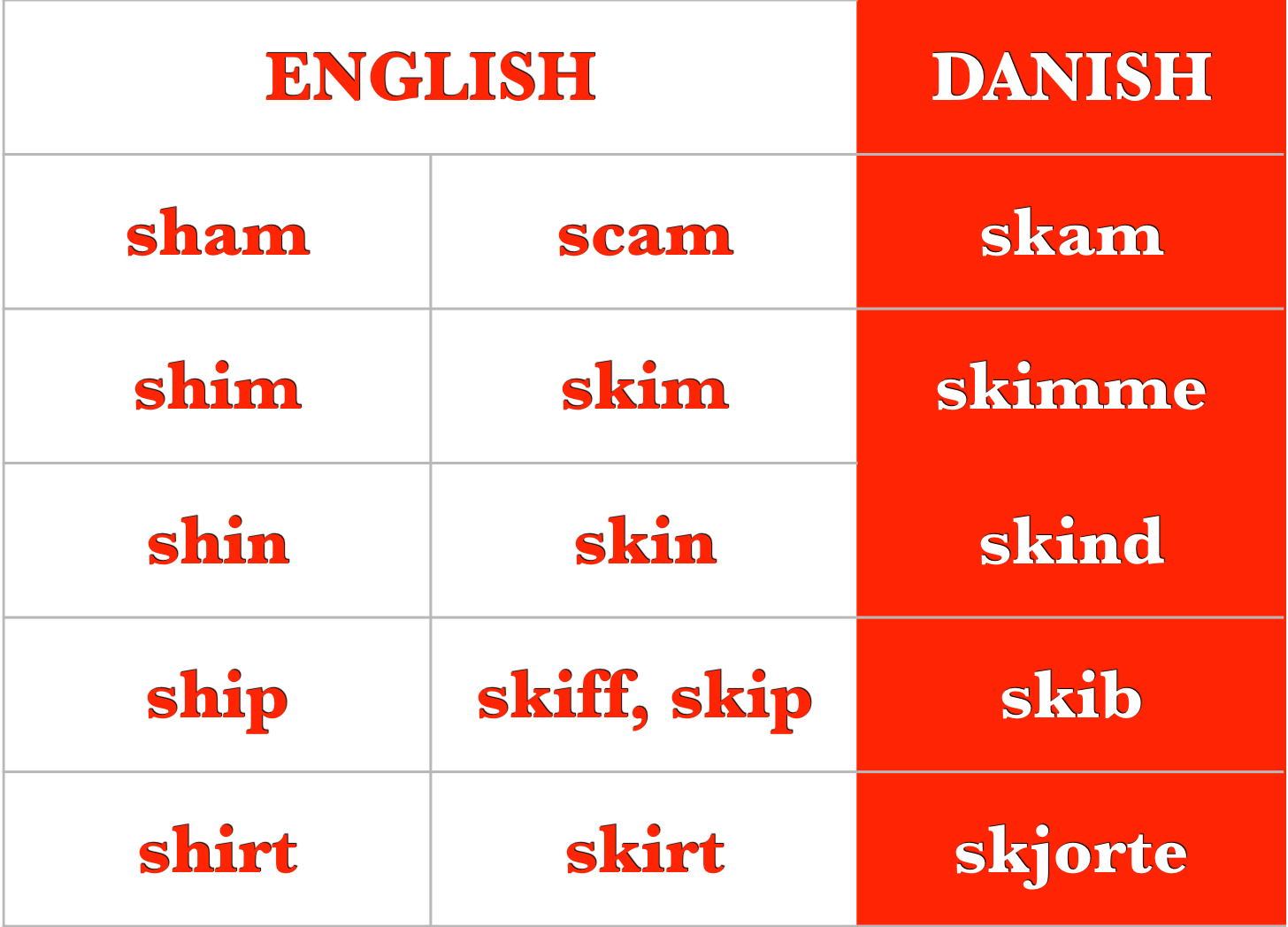
The original title of the film, Skammerens Datter, caused me to contemplate the phenomenon that, faute de mieux, I have come to call the ‘constellation of coupled cognates’. To be a little more precise, the relationship between ‘shame’ and its Danish cousin prompted thoughts of the wondrous plenitude of pairings that makes it possible for Anglophones to say …
After scamming the shipper by skimming sham shipments of skirts and shirts, the shifty skipper and his skillful shill skipped away on a shiny skinny skiff.
So, how did this dynamic dualism come to pass?
Years ago, well before the expiration of manufacturer’s warranty on the runic alphabet, people of the Proto-Germanic persuasion lived in perfect harmony, at least when it came to language. Everyone agreed, for example, that the wooly creature nibbling grass in the front yard was called a *skap.
At some point, some of these folk took *skipa for greener pastures. Some went west. Some went north.
Years passed. (Imagine, if you will, the hands of an analog office clock going round and round, very fast.)
The people who had traveled in a westerly direction turned the ‘sk’ in *skipa, and other words that started the same way, into ‘sh’. Those who had journeyed north, however, were too busy dreaming of a future full of flat-pack furniture and snap-together building toys to bother with such an extensive metamorphosis.
More years passed. (This time, please visualize the pages flying off one of those rip-a-sheet-a-day calendars.)
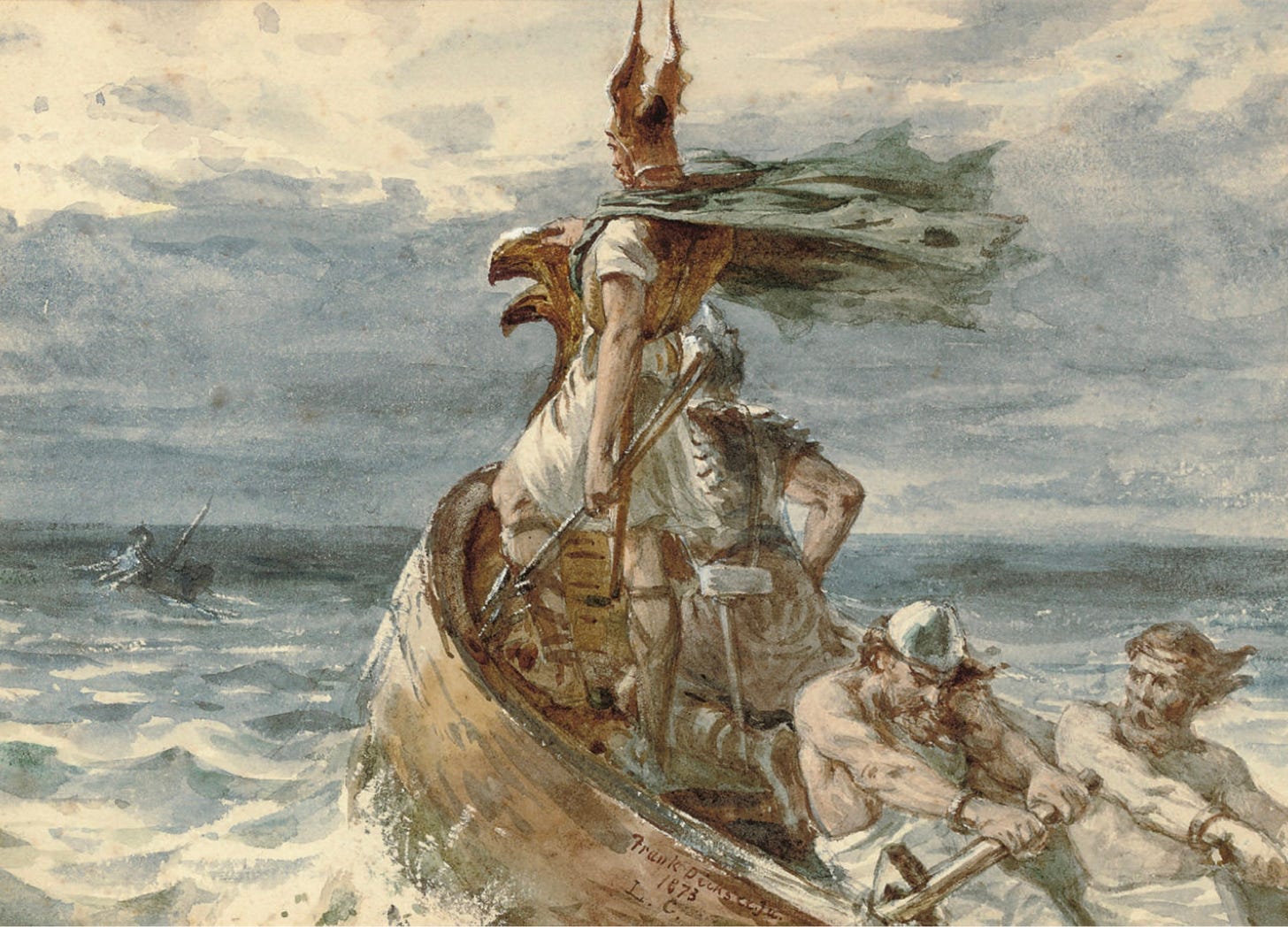
Some of the Northmen decided to make an extended visit to their western cousins, and, in particular, those who had settled on the island of Britain. While this reunion began poorly, and remained troubled for several centuries, it added much to the tongues that, in the fullness of time, would become English and Scots. Thus, when folks wished to replace the tunics that their ancestors had called a *skurtjon with a ‘shirt’ and a ‘skirt’, suitable names for the new-fangled garments lay close at hand.
In some cases, the two members of one of the pairs produced by this process differed little from each other. A ‘scam’, for example, often involves the use of ‘sham’ sincerity. In others, the basic idea took very different forms. No carpenter, after all, will ever employ something skimmed from a pail of yoredaily* milk as a ‘shim’.
In addition to enriching the languages that they spoke, the people who preserved these pairs of related words left a little present for their linguistic descendants, a trick that helps present-day Anglophones make sense of some of the words that they might encounter in Nordic lands. So, if you find yourself in Denmark, Norway, or Sweden, and run into the word sko, you will already know what it means.
Note: The asterisk hanging on the left edge of a word indicates that, while the noun, verb, or adjective has yet to appear in a manuscript or inscription, philologists have good reason to believe that yorefolk* spoke it at a particular point in space and time. When the little star twinkles on the right edge of a word, it reminds readers that the coinage in question made its debut on the pages of Extra Muros and that, as a result, has earned a place in our Glossary.
For Further Reading:


To Share, Subscribe, or Support:

Is ''Sko" the word for ''Shoe''?