

Entrée
Pardon My French

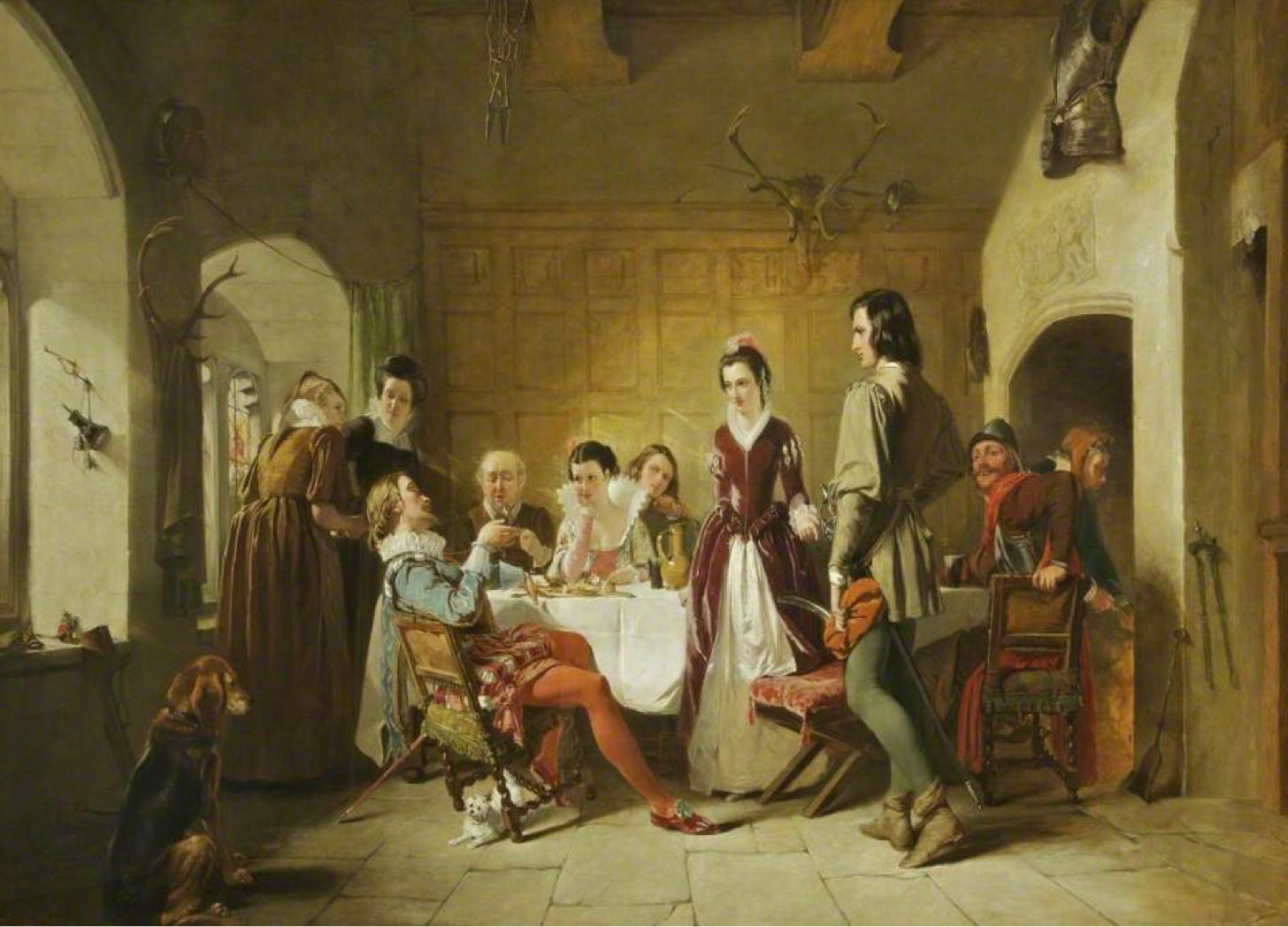
In A Little Dinner at Timmins’s, William Makepeace Thackeray used entrée to mean two different things.
The  women  had  had  a  long  debate,  and  something  like  a quarrel,  it  must  be  owned,  over  the  bill  of  fare.  Mrs.  Gashleigh,  who  had  lived  a  great  part  of  her  life  in  Devonshire, and  kept  house  in  great  state  there,  was  famous  for  making some  dishes,  without  which,  she  thought,  no  dinner  could  be perfect.  When  she  proposed  her  mock-turtle,  and  stewed pigeons,  and  gooseberry-cream,  Rosa  turned  up  her  nose — a pretty  little  nose  it  was,  by  the  way,  and  with  a  natural  turn  in that  direction.

'Mock-turtle in June, Mamma!' said she.

'It  was  good  enough  for  your  grandfather,  Rosa,’  the Mamma  replied:  'it  was  good  enough  for  the  Lord  High Admiral,  when  he  was  at  Plymouth;  it  was  good  enough  for the  first  men  in  the  county,  and  relished  by  Lord  Fortyskewer and  Lord  Rolls;  Sir  Lawrence  Porker  ate  twice  of  it  after Exeter races; and  I  think  it  might  be  good  enough  for ...’

'I  will  not  have  it,  Mamma!' said  Rosa,  with  a  stamp  of her  foot;  and  Mrs.  Gashleigh  knew  what  resolution  there  was in  that.  Once,  when  she  had  tried  to  physic  the  baby,  there had  been  a  similar  fight  between  them.

So  Mrs.  Gashleigh  made  out  a  menu,  in  which  the  soup  was left  with  a  dash – a  melancholy  vacuum;  and  in  which  the pigeons  were  certainly  thrust  in  amongst  the  entrées;  but  Rosa determined  they  never  should  make  an  entrée  at  all  into  her dinner-party,  but  that  she  would  have  the  dinner  her  own
way.
In the seventeen decades since Mr. Thackeray assembled this jeu de mots, one of these meanings has changed. The cooked dish that appeared right before the high point of a multi-stage meal – the prodigious piece of beef or mutton that Victorians called ‘the joint’ – has since moved to other parts of the gustatory workout. In the English-speaking parts of North America, entrée has come to describe the descendent of the aforementioned hunk o’ meat. Elsewhere in the Anglosphere, it often serves as a synonym for ‘starter’ or ‘appetizer’.
By the way, if you find yourself in Paris, with a rumbly in your tumbly, remember that a menu that refers to the main course of a meal as an entrée provides prima facie evidence of an attempt to appeal to transatlantic Anglo-Saxons. (The chalkboards of eateries that cater to people from other places will usually use plat to indicate dishes served on full-sized plates.)
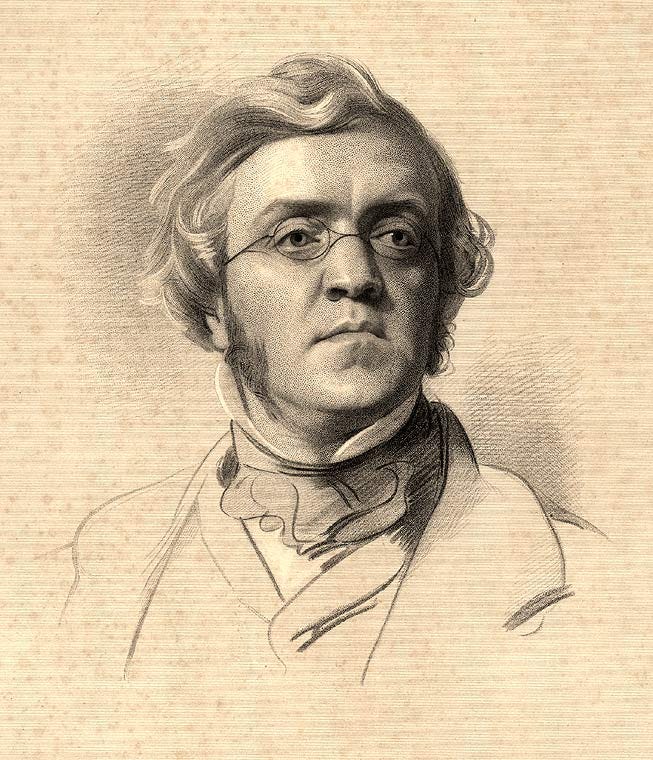
In the same century-and-three-quarters, the other sense of entrée employed by Thackeray – which allowed it to be used instead of ‘entrance’ or ‘appearance’ – went the way of mutton-chop whiskers. In much the same way, the increasingly democratic manners of the twentieth century deprived the kissing cousin of that meaning, which had once provided people with another way of saying ‘formal introduction’, with much of the work it had once done.
In the 1930s, a prolific American author of ‘how to’ books tried to breath new life into the food-free version of entrée by changing the position of the person making his first appearance. No longer dependent on the sponsorship of an established insider, the debutant had become his own promoter.
‘The approach, the entree, the first contact. This is a special art in itself. Many salesmen have lost their sale before they have opened their mouths, because of a bad approach. It is highly strategic. Try to make an appointment by telephone, keep it promptly. Do not try trick dodges to make an entree.’Alas, this initiative fell afoul of another artifact of the Age of the Common Man, the increasingly popular use of entrée to dress up the meat-and-potatoes dish at the heart of a sit-down meal. Thus, rather than describing the most challenging part of their profession as ‘the special art’ of the ‘entree’, American salesmen adopted the simple, memorable, and chillingly accurate, ‘cold call’.
Sources for Passages
William Makepeace Thackeray The Memoirs of Mr. C. J. Yellowplush.
The Fitzboodle Papers. The Wolves and the Lamb. Stories and Sketches (Boston; Houghton, Mifflin and company, 1889) page 362
Justus George Frederick How to be a Convincing Talker and a Charming Conversationalist (New York: 1937) page 184